

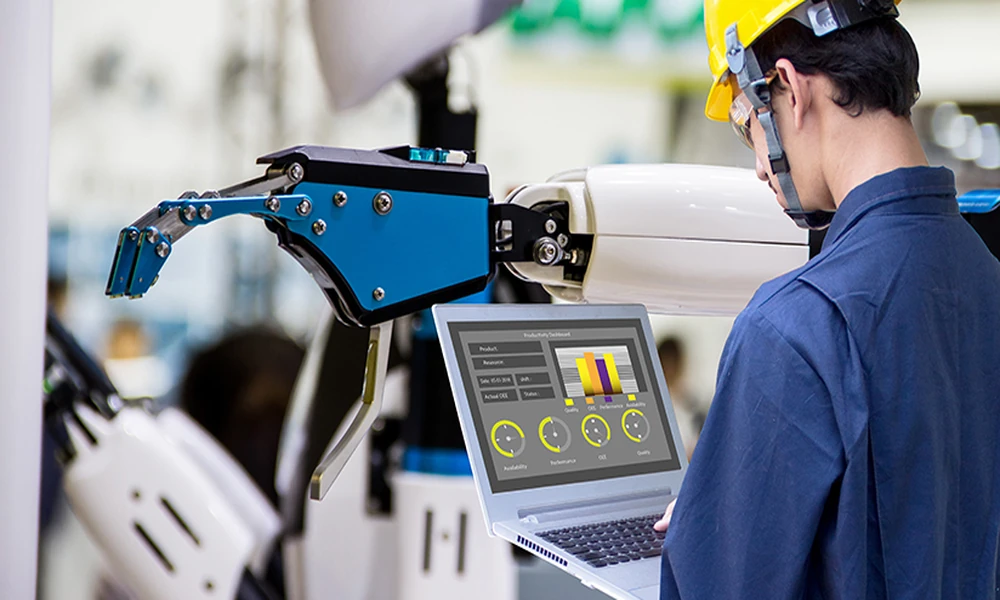
Modern manufacturing has a peculiar problem. Your high-speed production lines are running at peak efficiency. Output from assembly, machining, or packaging operations meets or exceeds targets. Yet somewhere between the end-of-line and the shipping dock, throughput stalls. The culprit is often the same: a palletizing operation that hasn’t kept pace with upstream improvements.
This scenario plays out across industries-from food and beverage to automotive components, consumer goods, and pharmaceuticals. A facility invests in faster upstream equipment, optimizes changeovers, reduces scrap, and improves line balance. But palletizing remains a manual or semi-automated task, performed by a crew that, despite their best efforts, simply cannot keep up. The result is a classic constraint: finished goods accumulate, buffer space fills, and production scheduling becomes reactive rather than planned.
The challenge is neither new nor trivial. Palletizing is physically demanding and repetitive, introducing ergonomic risk and fatigue-related variability. It requires coordination among multiple workers, making staffing unpredictable in tight labor markets. Quality suffers when operators rush to keep pace. Damage rates climb as products are stacked hastily or inconsistently. And the entire operation becomes a drag on otherwise efficient production systems.
Why Palletizing Lags Behind
Several structural factors explain why palletizing often falls behind modern production speeds.
Manual operations don’t scale linearly. A person or small team can palletize perhaps 15-25 cases per minute, depending on product weight, pallet configuration, and ergonomic constraints. Add wrapping, labeling, or positioning requirements, and throughput drops further. When a production line runs 40, 60, or even 100+ units per minute, manual palletizing becomes mathematically insufficient. Adding staff helps but introduces complexity-coordinating multiple people, managing fatigue, and maintaining consistency.
Capital constraints delay automation. Traditional robotic palletizing systems are expensive. Setup typically requires significant integration work, custom programming, and extensive safety guarding. A manufacturing facility may rationalize that investing in upstream improvements offers faster ROI, leaving palletizing for later. That “later” often never arrives, and the bottleneck persists.
Space and flexibility concerns hold back deployment. Conventional palletizing robots demand dedicated, well-defined spaces with rigid safety perimeters. Changing pallet patterns, product dimensions, or handling methods requires reprogramming and reconfiguration. In facilities with diverse product lines or frequent SKU changes, this inflexibility makes traditional robotic palletizing less attractive than it should be.
The Real Cost of Inaction
Tolerating a palletizing bottleneck extracts a hidden price beyond simple lost throughput.
Product damage increases when operators work under time pressure. Misaligned stacks, dropped layers, and improper wrapping damage goods before they leave the facility. That translates to scrap, warranty claims, and returns. Some manufacturers accept these losses as inevitable; they are not.
Operator injuries and absenteeism create staffing unpredictability. Palletizing is one of the most physically demanding tasks in manufacturing. Repetitive strain, back injuries, and cumulative trauma are common. High turnover means constant training, inconsistent performance, and safety risks during onboarding periods.
Scheduling becomes constrained. When palletizing cannot reliably match production output, production planning must account for the bottleneck. Shift schedules extend, overtime accumulates, and flexibility evaporates. A production line capable of meeting demand sits partially idle because finished goods cannot be cleared fast enough.
Modernizing Palletizing Operations
The solution is not to add more people but to upgrade the capability itself. Modern collaborative palletizing systems address the historical drawbacks of traditional automation.
A collaborative robot palletizer may offer a more flexible deployment path than traditional palletizing automation, particularly where floor space, product variety or phased implementation matter. Deployment time still depends on payload, reach, gripper design, safety measures, conveyor interfaces and site readiness, so schedules should be based on the actual application rather than a generic promise.
They adapt to product and process variation. Modern vision systems and flexible programming allow collaborative robots to handle multiple product sizes, shapes, and pallet patterns. Switching between configurations takes minutes rather than days. This flexibility is essential for manufacturers with diverse product portfolios or seasonal variations.
They work safely alongside humans. Collaborative robots are designed and certified to operate in shared spaces without extensive guarding or safety barriers. They include force-limiting technology and can be configured to stop or slow when they detect human proximity. This opens palletizing to facilities where space is constrained or where products must be staged by hand before palletizing.
They deliver measurable ergonomic and quality benefits. Removing the physically demanding palletizing task from workers reduces injury risk and fatigue. Quality improves when positioning is consistent and layers are built to specification. Operators shift to supervision, quality inspection, and problem-solving roles rather than repetitive stacking.
Assessing Your Situation
To determine whether modernizing palletizing makes sense for your operation, consider these practical questions:
- Is palletizing a documented constraint? Track your production output and palletizing rate over two to four weeks. If palletizing regularly trails production capability, it is a genuine bottleneck.
- What is your labor stability like? If staffing palletizing is chronically difficult or turnover is high, automation becomes more attractive on both operational and financial grounds.
- How much variation exists in your palletizing task? If you run relatively consistent products and pallet patterns, automation is more straightforward. High variation requires more flexible systems but is not an automatic disqualifier.
- What is your quality baseline? If damage rates, layer inconsistency, or other quality issues correlate with production speed, automation can improve outcomes.
Implementation Considerations
Deploying a collaborative palletizing system requires more than purchasing equipment. Successful implementations account for product handling, pallet staging and downstream workflow. Gripper technology, conveyor integration and sensing must work together. Operator training and change management matter as much as the robot itself. A phased rollout can give teams time to validate the process and refine it before relying on the cell for full production demand.
The Path Forward
Production environments that have solved upstream bottlenecks now face a choice at the palletizing step: accept perpetual constraint or modernize. The technology has matured enough that the latter is practical for manufacturers of nearly all sizes. The financial and operational case strengthens as labor availability tightens and quality expectations rise.
Palletizing need not be the operation that holds back your facility. With the right approach and tools, it can finally match the pace of modern production.
